Description
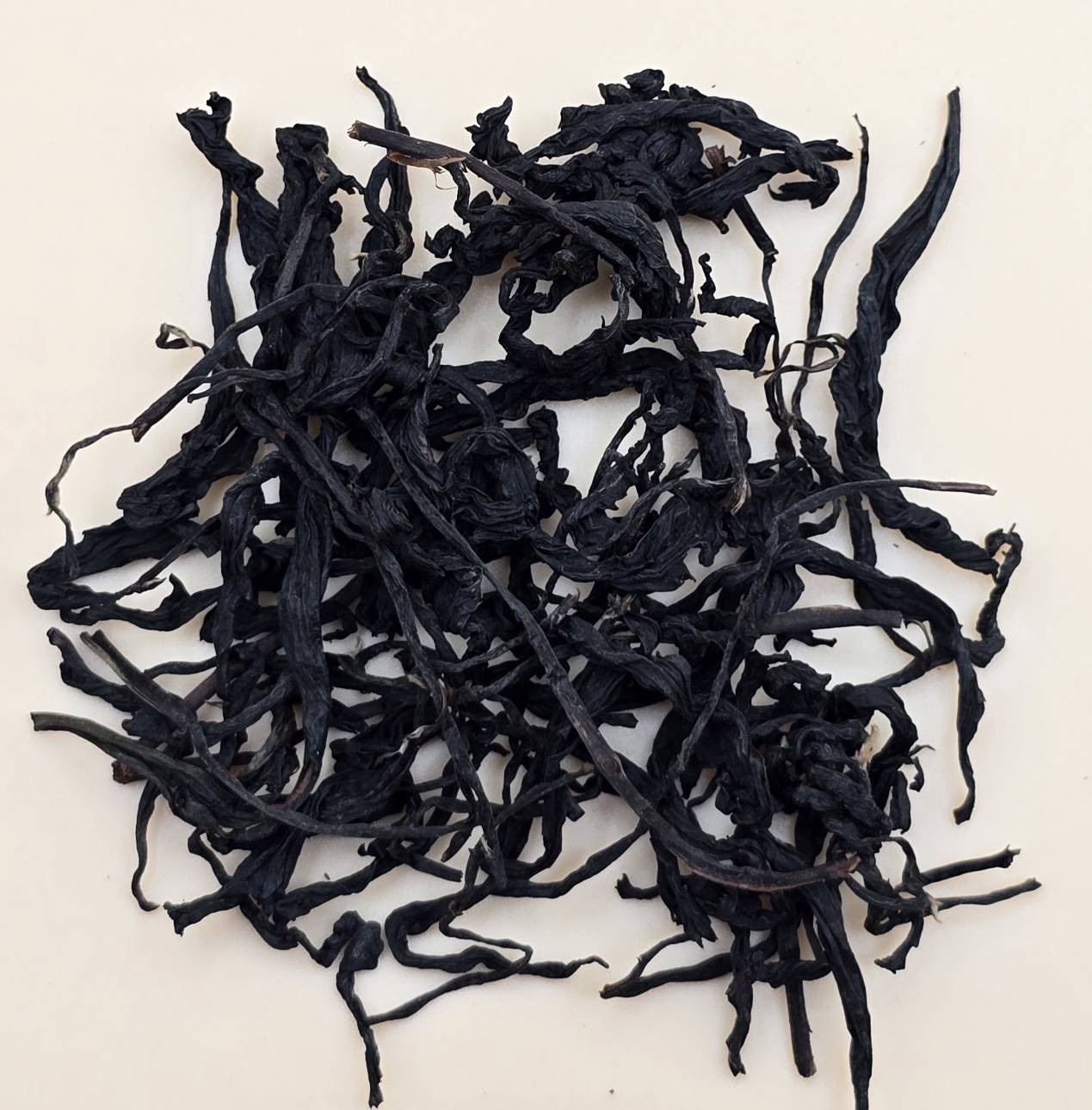
This Purple Tea is a Gourmet 2026 selection from Taiwan’s Shanlinxi area. The region is best known for creating needle-shaped varieties of green teas, as well as premium black teas. However, it also produces purple teas, which grow wild deep within the nearby forest environments.
This selection of Taiwanese needle-shaped tea has a taste profile that sits somewhere between a premium Black and Oolong tea. It’s a spectacle, but it’s not just style over substance, as this tea delivers a unique flavor profile that can range from sweet and refreshing to woody and complex.
Product Details:
- Tea Region: Private reserve near Taiwan’s Shanlinxi area.
- Season: Spring 2026.
- Caffeine Level: Mid Caffeine.
- Time of Day to Drink: Morning or Early Afternoon.
- Hand-Picked Tea: Yes.
- Forest Tea: Yes.
- Tea Quality: Gourmet, Competition Grade.
- Flavor: Refreshing, Huigan (returning sweet).
- Single Origin Tea: Single Origin Tea from Wild Harvest Environments.
- Tea Steep Method: 3-5 grams steeped for 20-30 seconds.
- Qi Strength: Strong Cha Qi (tea Qi)
- Attributes: Organic and Wild Harvest.
Grown at over 6,000 feet of elevation in a pollution-free environment, Purple Tea is exceptionally rare. The unique coloring stems from its high concentration of anthocyanins. These flavonoids create many of the vibrant red, blue, and purple pigments seen in many fruits and vegetables, including blackberries, blueberries, red cabbage, and eggplant.
Plantations use rare cultivars that naturally produce anthocyanins. In essence, the high UV exposure and strong sunlight mean the tea is forced to produce protective pigments.
In other words, the color comes from the tea plant itself, as opposed to any specific production methods.
The color of anthocyanins changes based on the acidity of the environment, as well as other factors. As a result, you may notice various shades of yellow, green, and purple when brewing the tea. The pH of your water is one of the biggest factors, but the tea itself should taste the same.


Reviews
There are no reviews yet